
Community Cat Discussion

Updated: Aug 4
A new article published in July 2026 titled ‘Bella and Charlie Are Not the Problem—It’s Us: The Real Causes of Wildlife Rescue in NSW’ explores why our native animal population is under threat.
Their data represented 52,475 rescued animals from 158 threatened species rescued in NSW from 2013 to 2024. (Dutton-Regester 2026)
Recorded reasons for admission:
11.6% Entanglement
11.4% Weather event
10.1% Abandoned/orphaned
7.3% Unsuitable environment
5.8% Motor vehicle collision
4.4% Animal attacks (include dog, bird, same species, fox, suspected/other – with 6% Cat related attacks)
30.9% Unknown “The large Unknown category should be interpreted cautiously because it indicates that the underlying cause could not be confirmed at the time of rescue, often because animals were already in severe condition, and likely included under-detected disease, trauma, environmental stress, toxin exposure, or multiple overlapping conditions.”
Dog and cat attacks accounted for a small proportion of recorded rescues overall, with dog related rescues being more than three times as common as cat related rescues.
The research finds that most harm is associated with human-modified environments, including hazardous infrastructure, roads, entangling materials, and habitat fragmentation.

Previous studies show similar patterns about increased human interfacing.
Australia Zoo Wildlife Hospital (Taylor-Brown et al, 2019)
Most common causes for admission
35% Motor vehicle trauma
The research finds that human related factors are the principal factors of morbidity and mortality of wildlife in Australia, while only 5% were caused by cat attacks.
Phillip Island Wildlife Clinic (Dutton-Regester 2024)
Most common cause for admission
25% Motor Vehicle trauma
The research finds that the increasing human residency on Phillip Island with urban development encroaching upon natural habitats has caused challenges for wildlife.
NSW Koala Strategy (Lunney et al 2023)
61% Disease (2011-2020)
6% Dog attacks
Cat attacks – not listed
This study highlights the increasing transmission of disease in koalas.
SE Queensland Fresh Water Turtles (O’Leary 2023)
Most common cause for admission
36% Motor vehicle trauma
These studies highlight the impact of humans, but they cannot differentiate between owned, semi owned and unowned cats in their animal attack data.

The only model ever used in South Australia to manage the unowned cat population is ‘catch and kill’. It has never been effective, the community cat population continues to rise, it is costly and the methods used to kill are inhumane.
Killing community cats, or better known as ‘cat eradication programs’, have only been successful on small islands. The term successful is misleading because of the time, money and collateral consequences that have resulted in eradicating a species from an established ecosystem.

On Macquarie Island (128km2), during 1996-2002, $3.8million was used to kill 761 cats. (Wolf 2012) As a consequence, the island suffered from rabbit, mice, and rat infestations. During 2007-2014, $24million was used to kill these additional animals (Darby 2009).
On Marion Island (290km2), during 1972-1991, $800,000 was used to kill 2220 cats. The modalities used included poison, dogs, traps, panleukapaenia and 30,000 one day old chicks injected with bait (Bester 2002). In 2011, Marion Island suffered mice infestations. The mice were eating the eggs, chicks and adult birds which caused a profound impact on the bird population (Howard 2019).
On Ascension Island (97km2), during 2002-2006, $1.4million was used to kill 635 cats. The modalities used included traps, shooting and poisons. Unfortunately, 40 percent of pet cats died during the program (Wolf 2012). This knowledge alone causes great concern for the pet cats on Kangaroo Island as they begin their eradication program.
The current practice of killing community cats has led to considerable problems, has utilised an enormous amount of continual spending of taxpayer money and we have an ever-increasing community cat population. Even though the eradication programs have been a spectacular disaster, our governing bodies still refuse to implement Trap, Neuter, Return as a viable program to decrease the community cat population.
If you support the killing of community cats and kittens, be careful what you wish for. Every animal, indigenous and non-indigenous in an established ecosystem serves a purpose. Attempts to remove one species will always have consequences.
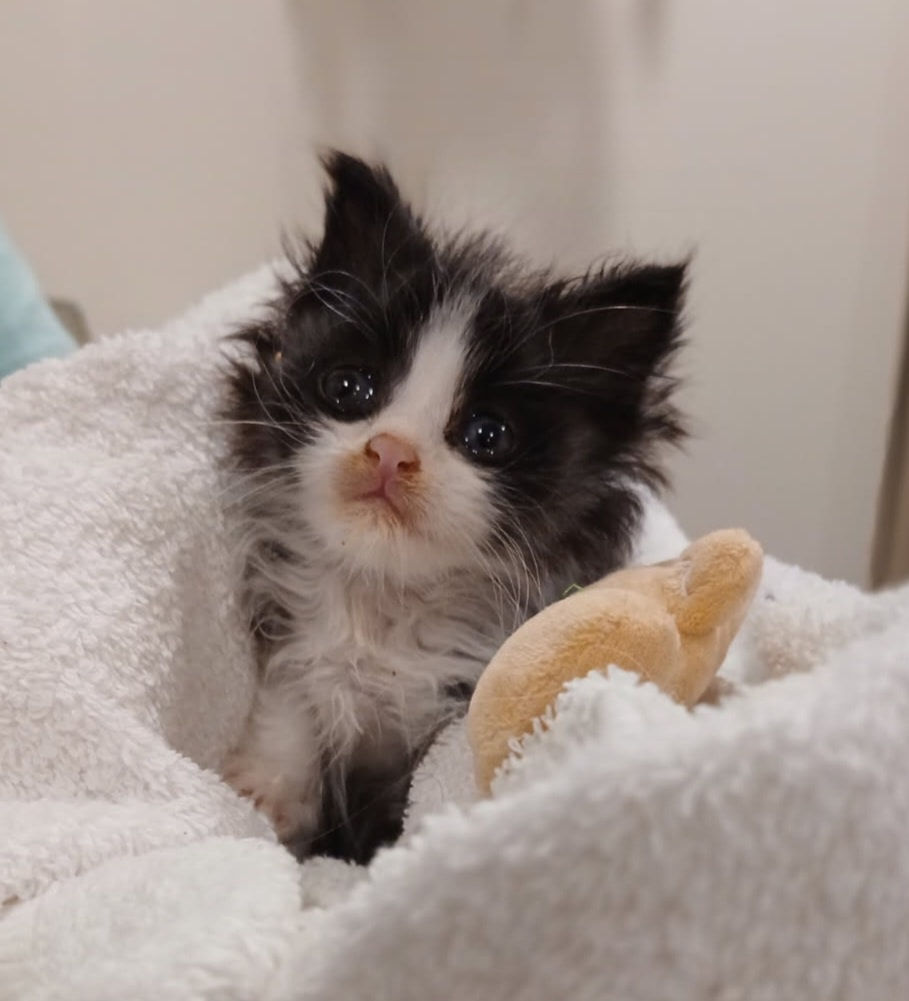
Images: Oscar, Dolly, Matilda, Garfield, Tigger and Frankie were community kittens. Through rehabilitation in Adelaide Pets Alive! foster care, they excelled at adapting into a home environment. Every community kitten that enters our foster care program is rehabilitated and adopted into loving homes.
References
Aukland, M (2020) Submission: Statutes Amendment (Animal Welfare Reform) Bill 2020, submitted to South Australian Parliament, Adelaide, South Australia.
Bester, M (2002) A review of the successful eradication of feral cats from sub-Antarctic Marion Island, Southern Indian Ocean South African Journal of Wildlife Research, Vol. 32, No. 1
Daniel Lunney, et al. (2023) Trends in the rescue and fate of koalas in New South Wales (1973-2020), with a focus on disease and trauma. Academia.edu, DOI: https://doi.org/10.7882/AZ.2023.026
Darby, A (2009) When the cat's away rabbits devastate island sanctuary, The Sydney Morning Herald, Sydney, NSW
Dutton-Regester, K.; Rand, J.; Liang, A. (2026) Bella and Charlie Are Not the Problem—It’s Us: The Real Causes of Wildlife Rescue in NSW. Animals, 16, 2174. https://doi.org/10.3390/ani16142174
Dutton-Regester KJ. (2024) Hospital admissions to Phillip Island Wildlife Clinic, Victoria, Australia, over a 10-year period, 2012–2021. Australian Journal of Zoology 71, ZO23047. https://doi.org/10.1071/ZO23047
Howard, J (2019) Hungry Mice Are Attacking and Killing Adult Albatrosses, Hakai Magazine, Coastal Science and societies.
O’Leary KS, Hill A, Doneley RJT (2023) Freshwater turtle admissions to a wildlife hospital in South-East Queensland, Australia over an eleven-year period, 2010–2021. Australian Veterinary Journal 101, 258–264.
Taylor-Brown A, Booth R, Gillett A, Mealy E, Ogbourne SM, Polkinghorne A, et al. (2019) The impact of human activities on Australian wildlife. PLoS ONE 14(1): e0206958. https://doi.org/10.1371/journal.pone.0206958
Wolf, P (2012) Witch-Hunt: How TNR opponents have co-opted science to target free-roaming cats, Seminar presented at the No Kill Conference 2012, The George Washington School of Law, Washington DC.
Wolf, P (2012) Witch-Hunt: How TNR opponents have co-opted science to target free-roaming cats, Seminar presented at the No Kill Conference 2012, The George Washington School of Law, Washington DC.


Comments